Plant Trials – Natural Pesticides & Biochar
- At March 22, 2013
- By Coordinator
- In Projects
 2
2
Today is the first in what will hopefully be an ongoing stream of posts by our interns about the projects they’re carrying out on the farm. We hope that these will not only provide useful information that we collect in our own experiments to other farms, but give potential interns an idea of what we’re doing and what they could potentially get involved in.
Kiara is an expert in integrated pest management who’s been working with us for a number of months in the development of natural pesticides and fertilizers. Before leaving this week she wrote us up a short post to let our readers know what she’s been doing.
—-
During my time as a work trade at Bona Fide I worked on a number of projects in the gardens with Nevis.
Insecticide/repellent trial
Using Nevis’s recipes from a local workshop, we produced 3 products which are supposed to help with insect problems. One product was made with zorillo and meca leaves, one was made with cedro leaves, and one was made with neem. The idea for testing these three products specifically was that they can be found on the farm or within a short distance and the only cost is labour. They are very time consuming to produce though!

To create the zorrillo and cedro products:
-collected leaves
-cut them up with scissors or tore them with our hands until they were small pieces
-put them through a hand grinder
-mixed with hands in water for about 5min
-left the pulp to soak in water overnight
-strained the liquid the next day
-put the liquid in pop bottles and left for over a month to ferment
-the lids had to be opened at least daily in the beginning to release gases
To create the neem product:
-deshelled neem seeds
-they had to be carefully sorted because almost all of the neem seeds (which were collected in the wet season) had some sort of fungus. We used the cleanest seeds we could.
-the seeds were put through the hand grinder
-mixed with hands in water for about 5min
-left to soak overnight
-strained the liquid the next day
-left in a bottle to ferment for a bit less than a month
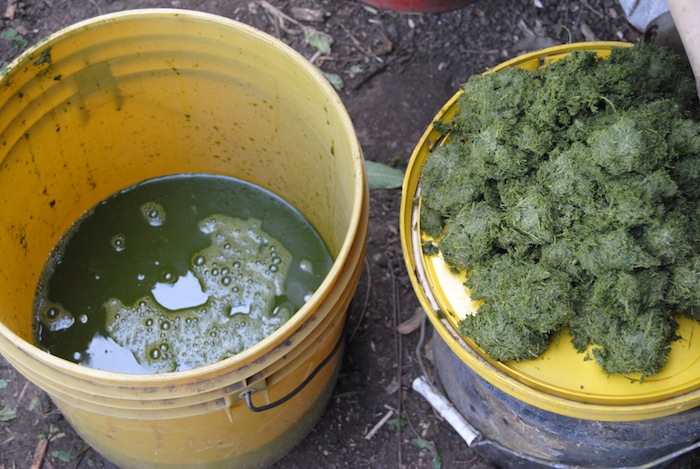
Because we did not have enough space at the farm to properly space out the treatments, the products were tested on squash plants at Hector’s house in town. The treatments were zorillo, cedro, neem and a water control. Four replicates were set up for each treatment. Single leaves about six inches wide were flagged, leaving a minimum spacing of one foot, and they were also marked with a permanent marker. The backs of each squash leaf were covered with aphids so we ended up having to reduce our number of replications and plot size. We cut the selected leaves in half and counted aphids on the underside of two replicates. One person completed each replicate. The other two replicates which were not counted, were simply observed. The products were then sprayed in the late afternoon when the sun was not strong. The products were diluted with water and soap was added to the neem product by lathering soap in water until it was foamy. Aphid numbers were then counted again six days post spray. It appears that neem may have an ability to kill aphids and zorillo and cedro may have repellent effects on squash plants. No conclusions can be made yet because we need to statistically analyse the data.
Biochar
http://www.biochar-international.org/biochar

A trial has been set up to view the effect of biochar in combination with different fertilizers. The five treatments we have are: biochar, biochar and worm compost, biochar and urine, biochar and worm compost and urine, and a water control. The biochar source was mainly corn cobs and these were broken down into fine bits. For the treatments with urine, the biochar was soaked/inoculated with the urine for at least a week. The worm compost was mixed with biochar a few days before mixing it with soil. In order to inoculate the biochar with worm compost, water was added so an equal amount of water was added to all of the treatments because we know that biochar has an effect on water. We have two replicates in the garden, each in a different bed. The beds were made by digging up the soil and adding fine gravel, rice hulls and finely chopped rice straw. The plots are six inches by twenty four inches and are separated by eighteen inches. Bricks were also placed in a line between the plots to stop nutrients and water from moving from one plot to another. The treatments were mixed into the soil within the top four inches and then covered with straw. Three days later, healthy basil transplants were planted in the plots- four per plot and spaced with four inches in between them. Lettuce and misuna plants were seeded around the basil plants, outside of the treatment areas. Measurements of width, height and maximum leaf number per node have been taken weekly and will continue to be taken. So far it appears that the plants growing with urine and biochar and urine, compost and biochar are much healthier than the other treatments. Because biochar is supposed to have long term effects on the soil, we will continue to observe the treatments.
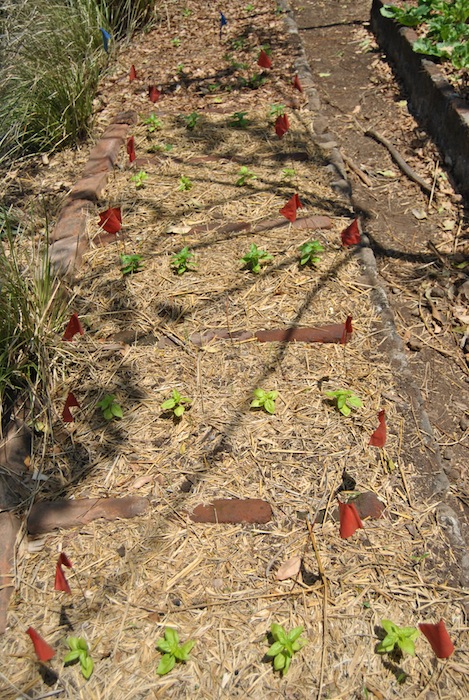
We can see the greener rows here, which contain biochar inoculated with urine. As time progresses these rows have seen markedly improved growth.
Other tests
-zorillo and meca leaf pulp does not appear to repel rats from eating planted bean seeds
-pop bottle containers can be used to protect planted beans from being eaten by rats
-bay leaves do not appear to repel weevils from eating sorgum
-Bromner’s peppermint soap diluted with water does not appear to function very well to kill aphids
-fresh cow manure mixed with water as a foliar fertilizer works really well but the USA regulations on the preharvest interval for raw manure, foliar sprays is about four months
Other
-tested the germination of some seeds
-started a batch of effective microorganisms using whey, molasses sugar water, untouched forest floor leaves and dirt and rice germ

-bed covers could be created out of a fine netting which can be bought in Managua to protect plants from insects (same material which is used to make mosquito nets)
-lots of umbels should be planted within the beds to attract beneficial insects- you have to let them go to seed
-beds are compacted but could be improved with lots of mulch
If you want more information you can contact
Kiara Jack
Browneyed_gerl@hotmail.com
The Great Gandul Harvest
- At March 12, 2013
- By Coordinator
- In Farm
- 4
Given that Finca Bona Fide exists in a state of constant motion, it’s hard to understand sometimes how infrequently this blog gets updated. I’m sure it’s been said before, I’m sure we’ll say it again, but from here on out we’re going to try to keep you, our readers and followers, in on what we’re doing here on a regular basis.

Along with processing a ton of jackfruit and working on preparing the materials for a natural building project on one of our dorms, we also harvested our gandul this last friday, or as it’s known in English, pigeon pea. Pigeon pea is a pretty special grain, full in protein, carbohydrates, and other nutrients that make it what we’d call a ‘staff’ food, something that people can rely on to support them nutritionally. Here at Bona Fide our goal is to increase food security in the area and throughout Central America in areas with climates analogous to that of Ometepe. This means finding reliable ways for farmers to at once improve soil quality and build up a range of ‘staff’ foods, creating the assurance that if one fails others will continue to support them. Gandul is a fast growing perennial legume with a high resistance to drought. It’s an ideal candidate as an innovative staple food for tropical and subtropical regions given to intense rainy seasons followed by long dry stretches, a pattern which grows more pronounced as climate change progresses.


Gandul is also a nitrogen fixer, meaning that its roots attract microorganisms which draw nitrogen from the air into the soil. When the plants are harvested or cut back, the roots die off and release the nitrogen for other plants to use in their own growth. Even better, after harvesting, the plant stalks can be used to make mulch, helping plants to better hold water along with slowly proportioning nutrients as they decompose.
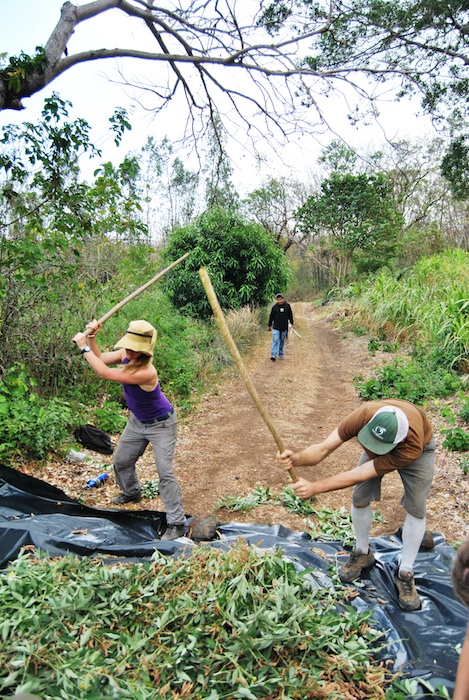
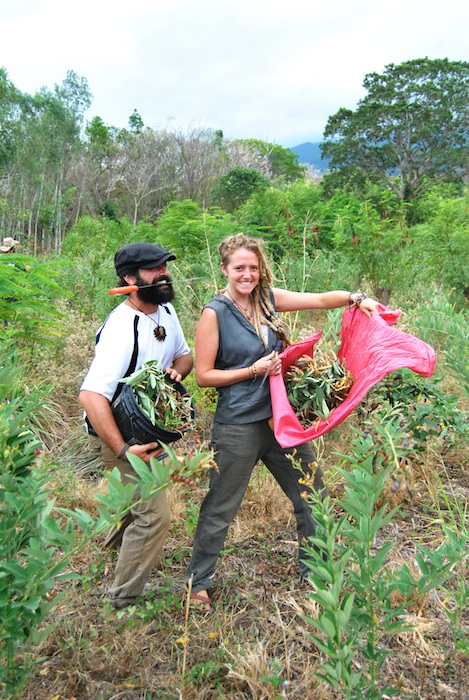
Our gandul crop is one of a few being used in our on-contour alley cropping experiments; planting staple crops in between alleys of larger nitrogen fixers which serve as wind break, and smaller nitrogen fixing grasses like vetiver, which help prevent erosion. During the rainy season, the same field we’ve used to cultivate gandul will flood and become our rice patty, and it will have been made especially fertile by the nitrogen collected from the gandul. Success in these crops not only provides our volunteers with an excellent source of food, but also serves as proof that these models function in this region and are something we will be able to disseminate within the community through education. In fact, we’ve already had 30lbs of our harvest requested as seed source by the a branch of the Nicaraguan government.

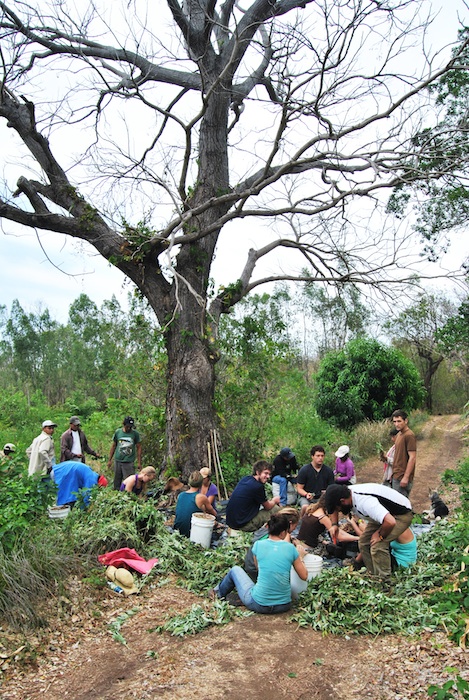
So last Friday we all got into the harvest spirit. It was an all-hands-on-deck kind of day, with many daily chores suspended in order to be able to rapidly and efficiently carry out the harvest. First we cut the branches with dry beans from the plants, then beat the beans off the branches. What didn’t come loose with a beating we picked off by hand. There was plenty of pica-pica and chimbre, a couple nasty rash inducing vines not unlike nettles up north, but volunteers held strong and we finished before the sun got too strong. You can see right here with just a little piece of land we got a considerable yield.

Legumes accomplished.
-Bennett

¡Twitter!
- At March 05, 2013
- By mitch
- In Uncategorized
- 0
Hey there,
I wasn’t lying when I said we would be actively updating the blog!
We would like to announce that Project Bona Fide has launched an official Twitter page. Check it out here! We will be updating it as often as possible with all things Bona Fide.
Furthermore we would like to announce that we will be using Instagram to share pictures of our day to day activities on the farm. Stay tuned for some beautiful pictures taken by our staff and volunteer community.
And last but certainly not least don’t forget to friend us on Facebook!
-Your friends at Bona Fide
Recent Comments